 ultimate-guide
Relocating to Ventura County: A 2026 Guide
Table of Contents
- Understanding the Cost of Living in Ventura County
- Exploring the Best Neighborhoods in Ventura County
- Housing Market and Home Types in Ventura County
- Moving to Ventura County with Kids: Schools and Family Life
- Commute Planning and Transportation Options
- Your Moving Checklist for Ventura County Relocation
- Safety, Weather, and Quality of Life Factors
- Frequently Asked Questions
Last Updated: October 9, 2026
Understanding the Cost of Living in Ventura County
Ventura County's cost of living sits above the national average, driven primarily by housing, but the gap between a well-chosen neighborhood and a premium coastal address can swing a budget by thousands per month.
Housing: The Dominant Line Item
Housing consumes the largest share of most relocating budgets. Broad patterns:
- Coastal communities (Ventura, Oxnard, Port Hueneme): Premium pricing tied to beach proximity, harbor access, and walkable downtowns. Expect the highest per-square-foot costs in the county.
- Inland suburban communities (Thousand Oaks, Newbury Park, Camarillo): Strong school reputations and planned development push prices above the county median but below the coast.
- Eastern valley communities (Simi Valley, Moorpark, Fillmore, Santa Paula): Generally the most attainable entry points, with trade-offs in commute distance and, in some areas, older housing stock.
Because prices shift with rates and inventory, verify current ranges with a local agent or live listing search before setting a budget.
Property Taxes Under Proposition 13
Proposition 13 caps the base assessment at 1% of a property's purchase price and limits annual increases to the change in the California Consumer Price Index, not to exceed 2% per year.
Many communities have also approved local bonded indebtedness, an additional line on the tax bill. Ask your agent or escrow officer for a full tax disclosure on any property.
Insurance: Homeowners and Fire
Homeowners insurance in California has tightened, particularly near wildland-urban interface zones:
- Standard homeowners policies cover fire, but underwriting standards vary by insurer and by the property's fire-risk score.
- Properties in higher-risk foothill and canyon areas may require a California FAIR Plan policy as a backstop, often paired with a separate difference-in-conditions (DIC) policy.
- Get quotes early: insurance can be a contingency in escrow, and a property may become difficult to close if coverage is unavailable.
Utilities and Recurring Costs
Utility costs vary by city and by whether you are served by a municipal or investor-owned utility. California electricity rates are among the nation's highest, and inland summer air-conditioning pushes bills above coastal averages. Budget for:
- Electricity and gas
- Water, sewer, and trash
- HOA dues, common in many planned communities and condo complexes
A Simple Budget Framework
A practical approach used by many relocating households:
- Set your maximum monthly housing payment, including principal, interest, property tax, insurance, and HOA.
- Add 15-25% of that figure as a buffer for utilities, maintenance, and the surprises that come with any move.
- Compare that total against your take-home pay, not gross income.
- Only then compare specific neighborhoods.
Where the Budget Stretches Furthest
The further inland from the coast, the more square footage your dollar buys, with trade-offs in commute time, summer heat, and sometimes older infrastructure. Naming the trade-off before you shop keeps you from chasing properties that do not fit your priorities.
Exploring the Best Neighborhoods in Ventura County
Choosing the right neighborhood determines your daily experience, commute length, and long-term appreciation. Let your priorities, beach access, schools, walkability, or proximity to employment, guide your selection.

Coastal Communities and Beach Lifestyle
Coastal neighborhoods like Ventura, Ojai, and Oxnard offer direct beach access, vibrant dining, and year-round recreation, appealing to families seeking a beach town lifestyle and professionals who value proximity to the Pacific.
Ventura's downtown waterfront district combines walkable shopping and dining with sandy beaches and a working pier. Housing runs premium, but the lifestyle justifies the cost for many relocating families.
Oxnard, the county's largest city, offers more affordable coastal living than Ventura proper.
Suburban and Family-Friendly Areas
Thousand Oaks sits inland and offers excellent schools, safe neighborhoods, and suburban convenience, attracting families relocating to Ventura County who prioritize education.
Newbury Park offers similar suburban benefits with slightly lower housing costs than Thousand Oaks. Commutes to Los Angeles average 45-60 minutes, making it ideal for remote workers or flexible schedules.
Affordable Options Near Los Angeles
Simi Valley and Moorpark offer more affordable entry points while maintaining suburban character, attracting first-time buyers and families relocating to Ventura County on tighter budgets.
Port Hueneme provides waterfront affordability, with military ties shaping the community. Veterans relocating to Ventura County often find it welcoming and cost-effective, and direct beach access plus lower prices than Ventura or Oxnard appeal to budget-focused buyers.
Housing Market and Home Types in Ventura County
Ventura County's housing stock ranges from beachfront condos to suburban homes to rural properties.
New construction appears mainly in planned inland communities, while coastal properties tend toward older, established homes. Move-in-ready inventory varies seasonally, with spring offering the most selection.
A buyers agent familiar with Ventura County's market helps you identify emerging neighborhoods, understand pricing trends, and navigate competitive offers.
Moving to Ventura County with Kids: Schools and Family Life
Families relocating to Ventura County prioritize school quality, extracurriculars, and neighborhood safety. District performance varies widely, making neighborhood choice critical.
Thousand Oaks Unified School District ranks among the county's strongest, with well-funded schools and high graduation rates.
Beyond academics, Ventura County offers beaches, hiking trails, sports leagues, and family-friendly events, with a mild climate supporting outdoor activities most of the year.
Commute Planning and Transportation Options
Commute time is one of the few relocation factors you cannot change after you buy. Ventura County's geography, a coastal plain separated from the Los Angeles basin by the Santa Monica Mountains and Conejo Grade, creates distinct commute patterns that vary sharply by city.
The Major Corridors
- US-101 (Ventura Freeway): The county's primary north-south artery, running from Thousand Oaks through Camarillo, Oxnard, and Ventura. It carries the heaviest commuter volume and is the default route for anyone traveling to or from Los Angeles.
- SR-118 (Ronald Reagan Freeway): Serves Simi Valley and Moorpark, connecting east toward the San Fernando Valley. Often a viable alternative to US-101 for eastern-county residents.
- SR-23: Links Thousand Oaks and Moorpark to the 118 and 101, useful for cross-county trips.
City-by-City Commute Patterns
- Thousand Oaks and Newbury Park: Closest to Los Angeles via the 101 through the Conejo Grade. Peak-hour drives to the San Fernando Valley and downtown Los Angeles are commonly the longest in the county, and the grade itself is a known bottleneck.
- Simi Valley and Moorpark: Access to the 118 gives residents a second route into the San Fernando Valley, which many commuters find more predictable than the 101.
- Camarillo: Central location on the 101, roughly equidistant between Ventura and Thousand Oaks. Reasonable access to both coastal and inland job centers.
Rail: Metrolink and Amtrak
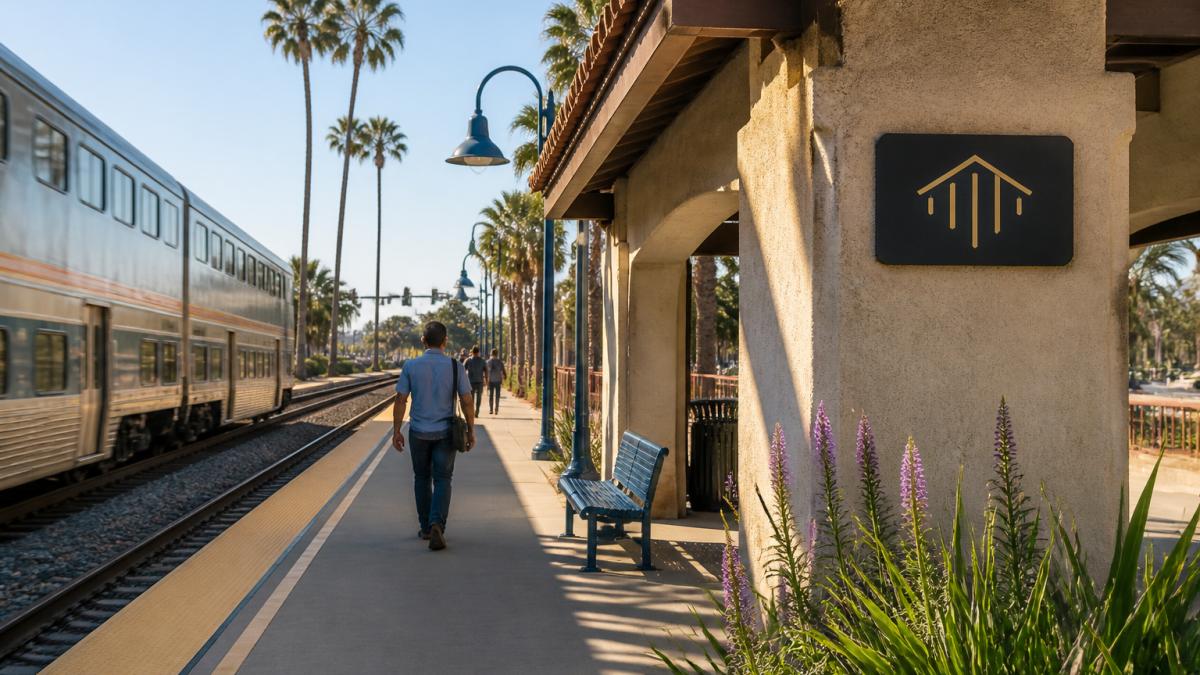
Metrolink's Ventura County Line connects the county to Los Angeles Union Station, and Amtrak's Pacific Surfliner also runs through the county. For commuters whose workplace is near a station, the train can convert a stressful drive into productive time. Check current schedules and fares directly, as service levels and pricing change.
Bus and Local Transit
Local bus service operates within and between county cities, but coverage and frequency are limited compared to the Los Angeles metro system. For most residents, buses supplement rather than replace a car. Park-and-ride lots along the major corridors support carpooling and rail connections.
Practical Commute Planning
- Test the drive at the actual time you would travel. A Saturday afternoon drive tells you nothing about a Tuesday at 7:30 a.m.
- Identify your destination first, then your city. A 20-minute difference in commute can be worth more than a 200-square-foot difference in house size.
- Check whether your employer offers transit subsidies or vanpool programs. Many larger employers do.
- Factor in the Conejo Grade and the 101/405 interchange if your route touches them; both are recurring delay points.
- Consider a hybrid schedule. Even two remote days per week can make a longer-commute city viable.
Reverse Commutes and Local Employment
Not everyone drives toward Los Angeles. Healthcare, higher education, agriculture, logistics, and local government provide substantial in-county employment, and reverse commutes are increasingly common. If your job is local, choose your city based on lifestyle and housing rather than freeway access.
Your Moving Checklist for Ventura County Relocation
Relocating to Ventura County requires coordination across housing, logistics, and local setup. Breaking the process into phases reduces stress and ensures nothing falls through the cracks.
Before You Move: 3-6 Months Out
Start with research and financial preparation. Get pre-approved for a mortgage, this strengthens your offers in a competitive market.
Connect with a buyers agent at 805forsale.com who understands Ventura County neighborhoods, pricing, and market dynamics. A local agent accelerates your learning and provides access to off-market opportunities.
Notify your employer about your timeline and explore remote work options.
One Month Before: Final Preparations
Lock in your home purchase or rental agreement, and arrange the inspection and any appraisals.
Update your driver's license and vehicle registration with California DMV. Research car insurance options, California requires minimum liability coverage, and quotes vary by location within Ventura County.
Create a packing timeline and begin sorting belongings. Confirm school enrollment if relocating to Ventura County with children.
Moving Week and After
Execute your move with a detailed checklist.
Explore your new neighborhood immediately: locate grocery stores, gas stations, schools, parks, and medical facilities. Introduce yourself to neighbors and join community groups or social media pages to ease the transition.
File any necessary paperwork with state and local government, register to vote, update insurance policies, and confirm all utilities are working.
Safety, Weather, and Quality of Life Factors
Ventura County's Mediterranean climate, coastal access, and community safety make it attractive to relocating families.
Weather stays mild year-round, with summers averaging 75-85°F and winters rarely dropping below 50°F.
Safety varies by neighborhood.
Quality of life reflects access to beaches, parks, cultural events, and community engagement.
At 805forsale.com, we help buyers and sellers accomplish their real estate goals in Ventura County.
Frequently Asked Questions
Why is rent so high in Ventura County?
Ventura County's proximity to Los Angeles, coastal access, and limited housing inventory drive up rental and home prices. Demand from professionals working in the LA area, combined with the area's desirable weather and beaches, keeps costs elevated. First-time buyers and renters often find affordability challenging compared to inland California regions, though prices vary significantly by neighborhood and city within the county.
What should I know before moving to Ventura County?
Before relocating to Ventura County, research neighborhoods that match your budget and lifestyle. Understand commute times to your workplace, as traffic can be heavy during peak hours. Check school ratings if you have children, review local safety statistics by city, and factor in property taxes and insurance costs. Visit during different seasons to experience the weather and community feel. Connect with a local real estate agent who understands the market nuances.
Is Ventura County a good place to raise a family?
Yes, many families thrive in Ventura County. The region offers excellent schools in areas like Thousand Oaks and Ojai, safe neighborhoods with suburban feel, and outdoor recreation including beaches and parks. However, housing costs are significant, so evaluate your budget carefully. Commute times vary by neighborhood and your workplace location. Families appreciate the year-round mild weather, family-friendly dining and entertainment, and access to both coastal and mountain activities.
How do I choose a Ventura County neighborhood that fits my needs?
Start by identifying your priorities: beach access, school quality, commute distance, affordability, or suburban feel. Research neighborhoods like Ventura, Oxnard, Thousand Oaks, and Ojai to compare housing costs, safety ratings, and local amenities. Visit neighborhoods at different times to assess traffic and daily lifestyle. Use online tools to check school ratings and commute times to your workplace. Working with a local real estate agent can provide insider knowledge about neighborhoods and help match your needs to the right area.
What are the hidden costs of relocating to Ventura County?
Beyond the home purchase price, budget for property taxes (approximately 1% of home value annually), homeowners insurance (higher in coastal areas), HOA fees if applicable, and DMV registration for vehicles. Utility costs vary by location. Renters should account for higher deposit amounts and potential rent increases. Factor in relocation expenses, home inspections, and title insurance. Many newcomers underestimate commute costs and time; calculate fuel, parking, or transit passes based on your actual workplace location.
How long should I plan for a relocation to Ventura County?
Plan 3-6 months for a smooth relocation. Start by researching neighborhoods and getting pre-approved for financing. Spend 1-2 months actively house hunting and making an offer. Allow 30-45 days for inspections, appraisal, and closing. If selling an existing home, add 2-3 months to that timeline. For renters, the process is shorter (4-8 weeks total). A detailed moving checklist helps ensure you handle school transfers, DMV registration, utility setup, and address changes before or immediately after arrival.