 ultimate-guide
Why Invest in Ventura County Luxury Real Estate in 2026
Table of Contents
- Market Stability and Investment Outlook for 2026
- Ventura County Luxury Market Trends 2026
- Best Neighborhoods for Luxury Homes in Ventura County
- Coastal Appreciation and Long-Term Wealth Building
- Buying Second Homes in Ventura County
- Tax and Insurance Considerations for Luxury Investors
- Getting Started: Your Investment Strategy
- Frequently Asked Questions
Last Updated: September 23, 2026
Why invest in Ventura County luxury real estate in 2026? The market fundamentals are stronger than most assume. While headlines focus on affordability challenges, the underlying economics for luxury properties tell a different story, one of strategic positioning, long-term wealth building, and lifestyle advantages that command premium valuations. The data suggests this is precisely the moment when informed investors should be evaluating opportunities in this market.
The luxury real estate segment operates under different rules than the broader housing market. Price appreciation, market stability, and buyer demographics create a distinct investment thesis. For high-net-worth individuals, second-home buyers, and those seeking to diversify their real estate portfolio, Ventura County presents specific advantages that deserve serious analysis.
Market Stability and Investment Outlook for 2026
The current market environment favors long-term investors over speculators. Luxury properties in Ventura County are experiencing slower transaction velocity than they did in 2024-2025, which actually strengthens the position of serious buyers. Reduced competition from casual investors means serious negotiations become possible again.
Market volatility exists, but it's concentrated in the entry-level segment. Luxury properties, those commanding $2 million and above, demonstrate greater resilience. Buyers at this price point are less sensitive to rate fluctuations and more focused on lifestyle, location, and long-term equity growth. This creates a fundamentally different market dynamic than the broader residential sector.
The inventory situation has stabilized. Properties that listed 18 months ago and failed to sell have either been delisted or repriced. This clearing process reduces uncertainty. For buyers working with experienced agents, it means the current inventory represents genuine opportunities rather than overpriced holdovers.
Ventura County Luxury Market Trends 2026
Coastal premium pricing continues to strengthen. Properties within walking distance of beaches or with unobstructed ocean views command sustained premiums. This isn't speculation, it's based on fundamental scarcity. There's a fixed amount of coastal land, and demand from high-net-worth individuals remains consistent regardless of broader market cycles.
Second-home demand has shifted. Rather than viewing Ventura County properties as investment vehicles to flip quickly, buyers increasingly see them as long-term lifestyle purchases. This mentality shift means less speculative pressure and more stable valuations. Properties are held longer, which reduces transaction costs and improves the investment timeline.
The luxury market trends show micro-market differentiation. Not all neighborhoods within Ventura County are performing equally. Some areas are experiencing steady appreciation while others remain flat. This is where local expertise becomes critical. Working with a buyers agent who understands neighborhood-level dynamics, rather than relying on county-wide statistics, is essential.
Best Neighborhoods for Luxury Homes in Ventura County
Coastal Enclaves: Ventura and Oxnard Waterfront
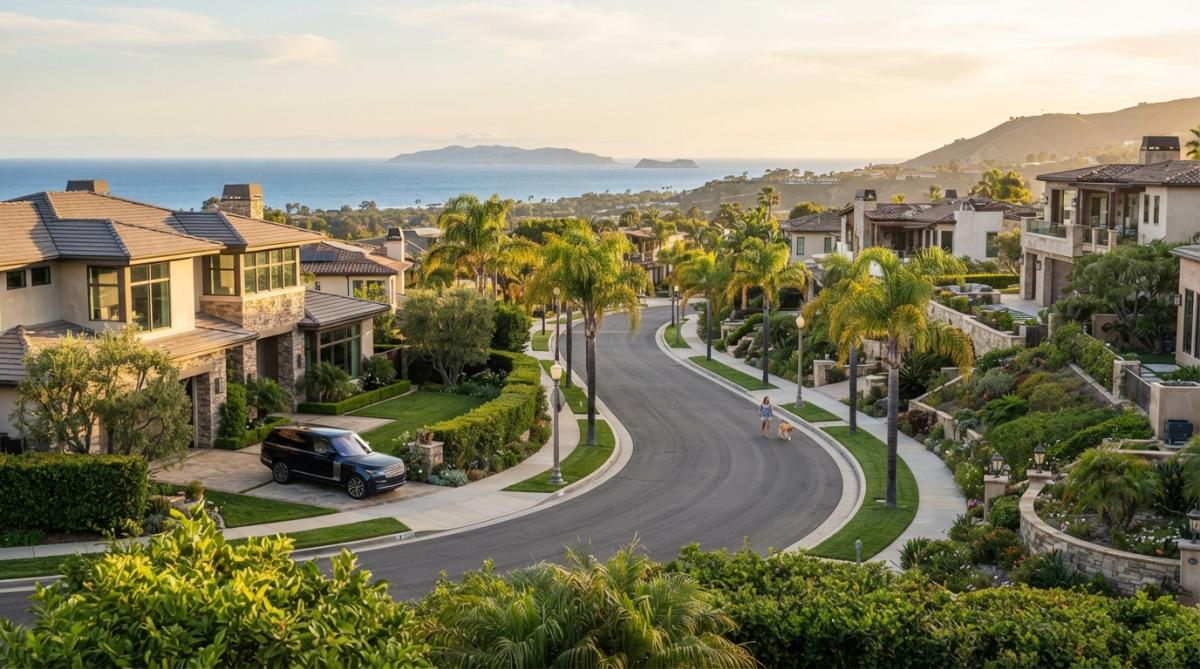
Direct oceanfront and near-beach properties in Ventura command the highest valuations in the county. Properties with unobstructed Pacific views typically list between $2.8 million and $6 million, depending on lot size and structure age. The scarcity driver here is literal: there is a finite amount of beachfront land, and demand from high-net-worth buyers remains consistent across market cycles. Days on market for oceanfront properties typically range from 90-150 days, reflecting the smaller buyer pool but also the seriousness of those who do pursue them. Appreciation in this segment has historically tracked 2.5-3.5 percent annually, outpacing broader county averages. The trade-off is exposure to coastal insurance premiums (addressed in detail in the Tax and Insurance section) and potential future sea-level considerations that should factor into 30-year holding assumptions.
Oxnard's waterfront neighborhoods, particularly around the harbor and newer planned developments, offer beach proximity at 15-25 percent lower price points than Ventura proper. A comparable home listing for $2.2 million in Oxnard might command $2.8 million in central Ventura. This creates rational value positioning for second-home buyers who prioritize coastal access over prestige address. Inventory in Oxnard's luxury segment moves slightly faster (75-120 days on market), suggesting less competition among buyers at this price tier.
Westlake Village: Master-Planned Luxury Infrastructure
Westlake Village operates as a gated, master-planned community with architectural review, community amenities, and enforced standards that appeal to executives and established business owners. Luxury homes here typically range from $1.8 million to $4.5 million. The planned community model means predictability: you know what your neighborhood will look like in 10 years because the development framework is fixed. This appeals to buyers who value stability and community infrastructure over raw scarcity-driven appreciation.
Market dynamics in Westlake Village show steadier, less volatile appreciation (2-3 percent annually) compared to coastal areas, but with lower price volatility. Days on market average 110-140 days. The buyer profile skews toward corporate relocation, family stability, and those seeking golf course access and resort-style amenities. For investors prioritizing predictability and lifestyle amenities over maximum appreciation potential, Westlake Village represents a different investment thesis than coastal properties.
Ojai Valley: Privacy, Acreage, and Mountain Positioning
Ojai Valley properties appeal to a distinct buyer segment: those seeking privacy, land, and mountain scenery rather than beach access. Luxury homes here typically sit on 1-5 acre parcels, with prices ranging from $1.5 million to $3.8 million depending on views and structure quality. The supply constraint is genuine, you cannot subdivide further without losing the privacy and acreage that drives demand. This creates a natural floor under valuations.
Appreciation in Ojai has been steady (2-3 percent annually) but less dramatic than coastal areas, primarily because the buyer pool is smaller and more specialized. Days on market tend to be longer (120-180 days) because fewer buyers are actively seeking mountain properties at luxury price points. However, for investors with a 15+ year horizon and capital to hold, Ojai offers lower entry prices and less speculative pressure than coastal markets. The trade-off is lower liquidity and a narrower buyer pool at exit.
Camarillo: Secondary Market Value Positioning
Camarillo has emerged as the rational secondary market within the county. Comparable homes cost 18-28 percent less than similar properties in Ventura or Westlake Village, yet offer equivalent construction quality and modern finishes. A $2.2 million home in Camarillo might command $2.8 million in Ventura. This price differential reflects location prestige and coastal proximity rather than structural quality.
Market velocity in Camarillo is faster than coastal areas (60-100 days on market), suggesting a larger pool of serious buyers at this price tier.
Thousand Oaks: Inland Luxury with Wildfire Considerations
Micro-Market Selection Strategy
Coastal Appreciation and Long-Term Wealth Building
Coastal properties function differently in an investment portfolio. They're not purely financial assets, they provide lifestyle utility, which adds a layer of value beyond pure market mechanics. This means owners are less likely to panic-sell during downturns, which stabilizes prices.
Buying Second Homes in Ventura County
The second-home market operates under different financing rules than primary residences. Lenders typically require larger down payments, often 25-30 percent for investment or second-home purchases. This means capital availability becomes the primary constraint, not borrowing capacity. Understanding these financing mechanics upfront is essential.
Tax and Insurance Considerations for Luxury Investors
Tax Structuring for Second Homes and Investment Properties
Tax efficiency matters more for luxury properties because the absolute dollar amounts are significant. A $3 million property generates different tax implications than a $500,000 home. The first decision is ownership structure: personal name, LLC, trust, or corporate entity. Each carries different implications for liability protection, capital gains treatment, and ongoing tax reporting.
2026 Insurance Costs: Coastal and Wildfire Risk
Liability Coverage and Umbrella Policies
Total Cost-of-Ownership Calculation
- Annual property tax: ~$3,360 (at 1.2 percent effective rate, typical for the county)
- Annual homeowners insurance: $4,500-$6,500
- Annual flood insurance: $2,000-$3,500
- Annual umbrella liability: $400-$600
- Annual maintenance reserve (1-1.5 percent of value): $28,000-$42,000
Insurance and Tax Due Diligence Checklist
Before making an offer on any luxury property, obtain:
- Binding insurance quotes from at least two carriers (not estimates)
- Confirmation of flood zone status and flood insurance requirements
- Wildfire risk assessment (CAL FIRE Tier rating if applicable)
- Property tax estimate based on purchase price
- Verification of any HOA or community assessment costs
- Review of deed restrictions or easements that might affect insurability
Getting Started: Your Investment Strategy
The first step is honest assessment of your actual investment timeline. Are you buying for 5 years, 10 years, or longer? Short holding periods require different property selection criteria than long-term positions. Properties with strong near-term appreciation potential differ from those positioned for 15-year wealth building.
| Investment Consideration | Primary Home | Second Home | Investment Property |
|---|---|---|---|
| Down Payment | 15-20% | 25-30% | 25-35% |
| Tax Deduction | Mortgage interest limited | Mortgage interest available | Mortgage interest + expenses |
| Capital Gains | Excluded (primary residence) | Long-term rate (if held 1+ year) | Long-term rate (if held 1+ year) |
| Insurance Complexity | Standard homeowners | Coastal/specialty coverage | Liability + specialty coverage |
| Management | Owner-occupied | Seasonal or rental | Professional management |
Frequently Asked Questions
Is it a good time to invest in Ventura County luxury real estate in 2026?
Market conditions in 2026 remain favorable for luxury investors seeking long-term appreciation. Coastal real estate in Ventura County continues to show stable demand from high-net-worth buyers, with median prices reflecting strong equity growth potential. The key is understanding your investment horizon and local market dynamics. Work with a knowledgeable buyer's agent who can assess current inventory levels, days on market, and seller concession rates to identify the right opportunity for your financial goals.
What makes the best neighborhoods for luxury homes in Ventura County attractive to investors?
Prime neighborhoods combine coastal access, quality of life amenities, and proven appreciation potential. Areas like Ojai, Westlake Village, and Camarillo offer residential developments with strong long-term investment fundamentals. These neighborhoods attract high-net-worth professionals and families seeking lifestyle benefits alongside asset diversification. Property condition, proximity to employment centers, and local school ratings also drive demand and help maintain property valuation over time.
How do second homes in Ventura County compare to primary residence investments?
Buying second homes in Ventura County serves both lifestyle and investment purposes. Second-home capital flows from buyers seeking coastal charm and vacation access while building real estate portfolio diversification. Market dynamics differ slightly from primary residence purchases, inventory moves differently, buyer leverage varies, and financing terms may shift. Understanding whether you're entering a seller market or buyer market is critical. A listing agent familiar with second-home trends can help you time your purchase strategically.
What tax and insurance factors should luxury investors consider?
Luxury property ownership carries specific tax implications, including potential deductions for mortgage interest, property taxes, and investment-related expenses. California property tax assessments and insurance costs for high-value coastal properties require careful planning. Coastal properties may face higher insurance premiums due to natural hazard exposure. Consult with a tax professional and insurance advisor to understand how these costs affect your overall investment return and long-term wealth strategy.