 ultimate-guide
What Is High-End Real Estate in Ventura County?
Table of Contents
- What Makes a Property High-End in Ventura County
- Luxury Homes for Sale in Ventura County: What Buyers Actually Get
- The Most Expensive Neighborhoods in Ventura County
- What to Look for in a Luxury Home Purchase
- Tax and Legal Implications of Luxury Acquisitions
- Financing High-End Properties: What You Need to Know
- Why Location Micro-Markets Matter More Than Square Footage
- Frequently Asked Questions
Last Updated: September 16, 2026
What Makes a Property High-End in Ventura County
What is high-end real estate in Ventura County? It is residential property priced in the top tier of the local market, typically defined by location, lot size, architectural quality, and custom amenities rather than square footage alone. 805forsale.com helps buyers and sellers accomplish their real estate goals in Ventura County, and the first thing to understand is that "luxury" here is not a single number.
Price Thresholds That Define the Luxury Tier
A common approach is to treat the top 10 percent of closed sales in a given area as the luxury tier. That threshold moves by neighborhood, not by countywide average. A home that reads as entry-level luxury in one coastal community may sit at the very top of the market ten miles inland. The median listing price for the broader county tells you almost nothing about the high-end segment, because luxury sales are too few and too varied to move a median.
Luxury Homes for Sale in Ventura County: What Buyers Actually Get
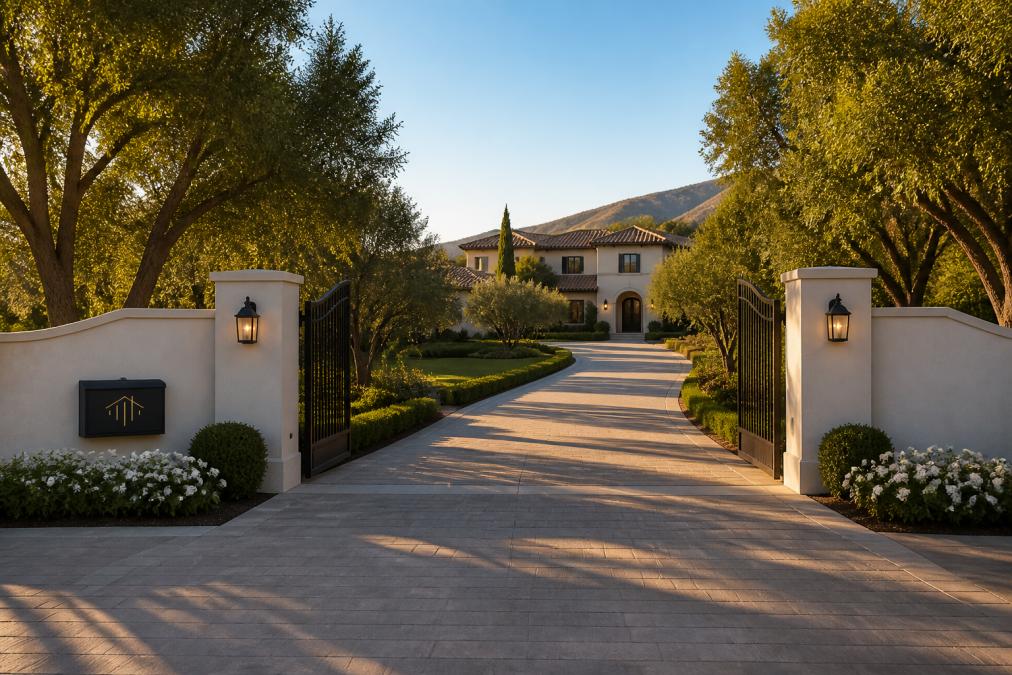
Luxury homes for sale in Ventura County deliver four things consistently: privacy, land, craftsmanship, and setting. A gated community or private estate with mature landscaping and a long driveway signals a different category of property than a remodeled tract home, even when the square footage is similar.
- Acreage and lot size, which drive privacy and future flexibility
- Custom amenities such as pools, guest houses, wine cellars, and equestrian property
- Coastal luxury settings with ocean views or direct beach access
- Architectural significance, including notable designers or period styles
- Smart home technology integrated at the build stage, not retrofitted
The Most Expensive Neighborhoods in Ventura County
The most expensive neighborhoods in Ventura County are not a single list, they are a set of micro-markets, each with its own price band, lot pattern, and buyer profile. Treating "coastal" and "inland" as the only two categories is the mistake most out-of-area buyers make. The luxury tier here breaks down into at least five distinct micro-markets, and the signals that define luxury shift from one to the next.
Coastal Enclaves: Ojai-Adjacent, Ventura, and the Oxnard Shores
Coastal luxury in this county is defined less by square footage than by proximity to the water and view corridors. The beach-adjacent pockets of Ventura and the Oxnard Shores area carry the tightest inventory in the county, often only a handful of listings at any given time in the top tier. Lots are typically smaller, homes are closer together, and the premium is paid for ocean access, pier or harbor proximity, and protected views.
Inland Estates: Ojai, Somis, and the Santa Rosa Valley
Inland estates trade the water premium for acreage, privacy, and equestrian infrastructure. Ojai draws buyers who want a distinct architectural and cultural identity along with lot sizes that support orchards, guest houses, and detached studios. Somis and the Santa Rosa Valley attract buyers who want working equestrian properties, barns, arenas, turnout, and trail access, within a reasonable drive of the coast.
Westlake Village and the Conejo Valley Corridor
The Westlake Village and broader Conejo Valley corridor functions as its own luxury micro-market with a different buyer profile: gated communities, HOA-governed neighborhoods, lake-adjacent properties, and a concentration of newer custom construction. Buyers here often prioritize security, community amenities, and school attendance areas over acreage. The trade-off is that lot sizes are smaller and HOA rules constrain what you can change, so buyers who want horses or heavy customization usually look elsewhere.
Camarillo Heights, Newbury Park, and the Hidden Micro-Markets
Beyond the headline neighborhoods, several smaller pockets command luxury pricing without the name recognition. Elevated view parcels in Camarillo Heights, specific streets in Newbury Park that back to open space, and a handful of gated enclaves scattered through the county all trade at a premium to their surrounding ZIP code. These are the micro-markets where a buyer's local knowledge, or lack of it, shows up most clearly in the final price.
How to Tell Which Micro-Market You Are Actually In
A practical test: pull closed comparables from the last six months within a half-mile radius, not the whole ZIP code. If the comps cluster tightly in price and lot size, you are in a defined micro-market. If they scatter widely, you are in a transition zone where the property's specific street, view, or lot orientation matters more than the neighborhood name.
What to Look for in a Luxury Home Purchase
What to look for in a luxury home purchase goes well beyond the listing photos. Start with architectural significance and lot size, then work through condition, documentation, and long-term costs.
Architectural Significance and Lot Size
Architectural significance affects both resale value and how a property holds up over time. A home by a recognized designer, or one that represents a distinct period style, tends to attract a narrower but more committed pool of buyers. Lot size determines what you can do with the property later, from adding a guest house to keeping horses.
Tax and Legal Implications of Luxury Acquisitions
Tax and legal implications of luxury acquisitions deserve attention before you make an offer, because at this price point the structure of the transaction often matters as much as the price itself. Most guides stop at "consult a professional." That advice is correct but useless. Here is what actually drives the numbers.
Proposition 13 and the Base-Year Reassessment
Property tax in California is governed by Proposition 13, which caps annual assessed value increases for existing owners but reassesses a property at its purchase price when it changes hands. That means your property tax bill is set by what you pay, not by what the previous owner paid. In a luxury transaction, the gap between the prior owner's assessed value and your purchase price can be substantial, and the resulting tax bill is a permanent annual cost, not a one-time closing item.
California State Board of Equalization property tax guidance
Proposition 19 and the Intergenerational Transfer Question
Proposition 19 changed how property tax reassessment works for transfers between parents and children, and it is the single most misunderstood rule in high-value estate planning here. The old rules allowed a parent-to-child transfer to avoid reassessment in many cases. Under the current framework, the exclusion is far narrower, and a property that is not the child's principal residence, or that exceeds the value threshold, can be reassessed to current market value.
How Title Is Held: Trusts, LLCs, and the Trade-Offs
High-value transactions frequently involve entities, trusts, or LLCs, and each structure carries different consequences:
- Revocable living trust, common for estate planning and privacy; avoids probate, but does not change property tax reassessment rules on its own.
- LLC ownership, can simplify management of a property held for investment or by multiple parties, but may complicate financing (many jumbo lenders will not lend to an LLC without a personal guarantee) and can trigger different tax treatment on sale.
- Joint tenancy or community property, affects how title passes on death and can interact with reassessment rules in ways that surprise buyers.
Escrow, Closing Costs, and the Attorney Question
Escrow and closing costs scale with price, and high-value transactions often involve title issues, easements, or recorded restrictions that a standard purchase would never surface. Work with a real estate attorney and a tax professional who handle high-end residential transactions. The cost of that advice is trivial next to the cost of a mistake in how title is held or how a transfer is structured.
Internal Revenue Service guidance on trusts and estates
Financing High-End Properties: What You Need to Know
Financing high-end properties rarely follows the standard playbook. Specialized financing options exist for jumbo loans, and lenders underwrite these differently than conforming loans.
Consumer Financial Protection Bureau mortgage guidance
| Buyer Situation | Financing Path | What to Prepare |
|---|---|---|
| Strong W-2 income | Jumbo loan | Recent pay stubs, tax returns, asset statements |
| Self-employed or business owner | Jumbo with full documentation | Two years of returns, profit-and-loss statements |
| Significant liquid assets | Asset-based or portfolio loan | Brokerage and bank statements |
| Veterans | VA jumbo loan | Certificate of eligibility, VA appraisal coordination |
Why Location Micro-Markets Matter More Than Square Footage
Location micro-markets matter more than square footage because luxury value is set block by block, not countywide. Two homes of identical size can differ dramatically in price based on which side of a road they sit on, what school attendance area they fall in, and whether they back to open space or a busy street.
Federal Reserve economic data on housing and mortgage rates
Frequently Asked Questions
What price point defines high-end real estate in Ventura County?
High-end real estate in Ventura County generally starts around $1.5 million, though the threshold varies by neighborhood. Coastal communities like Montecito-adjacent areas and Malibu-adjacent pockets push entry points higher, while inland areas may offer luxury properties at lower price tags. The median listing price for the luxury tier sits well above the county's overall median, and properties above $3 million represent the upper echelon. Location, lot size, and custom amenities all influence where a property falls within the high-end bracket.
Which neighborhoods are considered the most exclusive in Ventura County?
The most expensive neighborhoods in Ventura County include areas like Montecito, Hope Ranch, and coastal enclaves in Ventura and Oxnard. Inland, gated communities in Thousand Oaks and Lake Sherwood attract buyers seeking privacy and acreage. These areas feature architectural significance, larger lot sizes, and proximity to coastal luxury or equestrian property. Buyers searching luxury homes for sale in Ventura County often prioritize these micro-markets for their exclusivity, appreciation history, and access to top-rated schools.
What should buyers look for in a luxury home purchase?
When evaluating what to look for in a luxury home purchase, focus on architectural significance, lot size, and custom amenities that hold value over time. Check for smart home technology, high-end finishes, and whether the property fits your lifestyle needs, whether that's a vacation home, primary residence, or investment. A luxury home inspection is critical because repairs on custom features cost more. Also review property tax implications, HOA rules in gated communities, and the home's appreciation history in its specific micro-market.
How does financing a high-end property differ from a standard home loan?
Financing high-end properties often requires specialized financing options like jumbo loans, which exceed conventional loan limits. Lenders typically demand larger down payments, sometimes 20% or more, and may require more extensive documentation of income and assets. Some buyers use portfolio loans or asset-based lending. Closing costs on luxury acquisitions are higher due to larger loan amounts and title insurance premiums. Working with a veteran agent or buyers agent who understands escrow and luxury home inspection requirements can help you navigate the process.