 ultimate-guide
Avoiding Common Real Estate Mistakes in 2026
Table of Contents
- Skipping Mortgage Pre-Approval: The Mistake That Kills Deals
- Waiving Contingencies Without Understanding the Risk
- Common Home Inspection Pitfalls Buyers Miss
- How to Win Multiple Offer Situations Without Overpaying
- Pricing and Selling Mistakes That Cost Homeowners Money
- Overlooking Total Cost of Ownership and Hidden Expenses
- 2026 Market Risks: AI Valuations, Climate Insurance, and Tax Changes
- Frequently Asked Questions
Last Updated: September 13, 2026
Skipping Mortgage Pre-Approval: The Mistake That Kills Deals
Avoiding common real estate mistakes in 2026 starts with the step most buyers rush: mortgage pre-approval. A pre-approval letter is a lender's conditional commitment to fund your loan up to a set amount, based on verified income, assets, and credit. Without it, sellers in a competitive market often won't take your offer seriously.
Pre-Approval vs. Pre-Qualification: What Sellers Actually Care About
Pre-qualification is an estimate; pre-approval is verification. Sellers treat the second as the real signal because an underwriter has reviewed your file. Presenting a pre-qualification letter as pre-approval is a common mistake, listing agents spot the difference in seconds, and your offer gets ranked accordingly.
Debt-to-Income Ratio and Underwriting Traps That Sink Buyers
Your debt-to-income ratio compares monthly debt payments to gross monthly income, and it's the number that most often derails a deal late in the process. New car loans, financed furniture, and even a new credit card opened after pre-approval can push you over the threshold your lender requires. Keep your financial profile frozen between pre-approval and closing. For current loan limits and program rules, check the Consumer Financial Protection Bureau mortgage resources.
| Stage | What It Proves | Typical Action |
|---|---|---|
| Pre-qualification | Rough borrowing estimate | Quick online form |
| Pre-approval | Verified income and credit | Full document review |
| Underwriting | Final loan commitment | Appraisal and title review |
Waiving Contingencies Without Understanding the Risk
Waiving contingencies is the fastest way to win a bidding war and the fastest way to lose your earnest money. A contingency is a contractual exit ramp: financing, inspection, appraisal, and title contingencies each let you walk away and recover your deposit if something goes wrong. Remove them all and you own every risk.
Appraisal Gap Coverage and Earnest Money at Stake
An appraisal gap is the difference between the contract price and the appraised value. If you agree to cover a gap in cash and the appraisal comes in low, that money comes out of your pocket, not the lender's. Earnest money, the good-faith deposit you submit with your offer, is what you forfeit if you back out for a reason your contract doesn't protect. Before signing anything, read the HUD guide to the homebuying process so you understand which protections you're giving up.
Common Home Inspection Pitfalls Buyers Miss
A home inspection is a professional evaluation of the property's visible condition, not an appraisal, warranty, or guarantee. The biggest pitfall is treating a "passing" inspection as proof the house is sound. Inspectors report only what they can see, so problems behind walls, under slabs, inside sewer lines, and beneath the soil stay invisible unless you order a specialist.
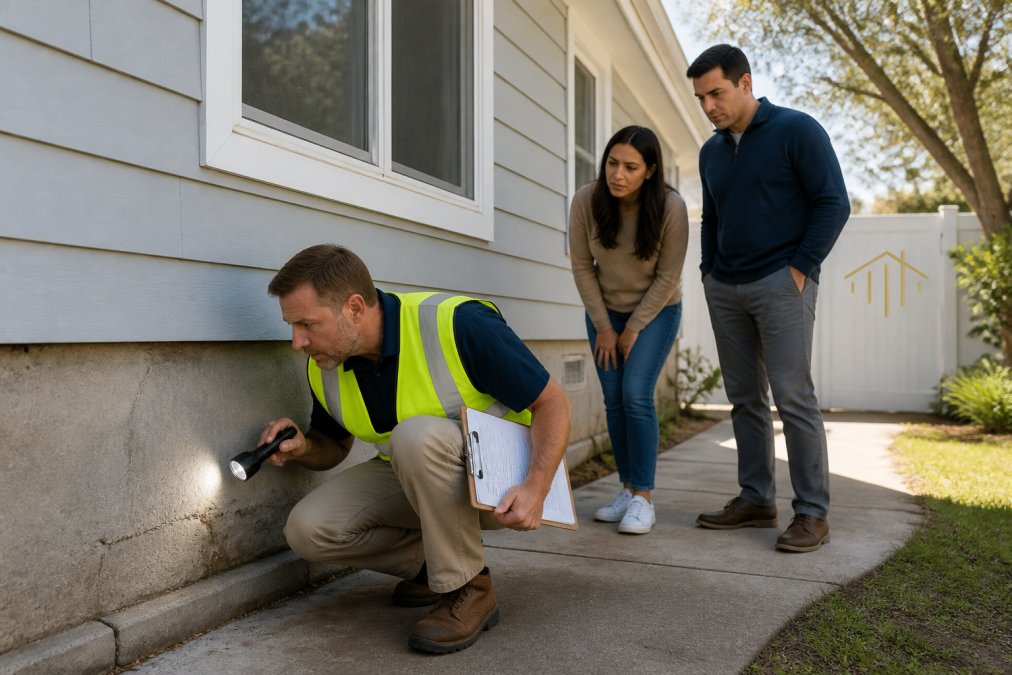
The Standard Inspection Only Covers So Much
A general inspection covers the roof, attic, foundation, electrical panel, plumbing, HVAC, and visible structure. It does not cover:
- Sewer lines, a camera scope is the only way to find root intrusion, bellies, or collapsed clay pipe, common in pre-1980 homes. A sewer line replacement can run into the tens of thousands of dollars.
- Radon, a colorless, odorless gas that seeps through foundations. The EPA recommends testing all homes below the third floor, and mitigation systems are a known, quotable expense (the EPA).
- Mold and moisture, inspectors flag visible growth but cannot see inside walls. If the report notes prior water intrusion, order air quality testing before removing your inspection contingency.
- Asbestos and lead paint, relevant in homes built before the 1980s. Disturbing either during a renovation triggers abatement costs and disclosure obligations.
- Chimney and fireplace, a Level 2 chimney inspection is a separate service and is often required by insurers before they will bind a policy.
Structural Red Flags and When to Call an Engineer
A general inspector will flag cracks, sloping floors, and sticking doors, but won't say whether the foundation is failing, that call belongs to a licensed structural engineer. Common triggers:
- Horizontal cracks in a foundation wall (often a sign of soil pressure)
- Stair-step cracks in brick or block
- Doors and windows that no longer close squarely
- A floor that visibly slopes more than a fraction of an inch over a short run
An engineer's report is a few hundred dollars; a foundation repair can be five figures. It's the cheapest insurance in the transaction.
Survey Gaps, Easements, and Boundary Surprises
A property survey confirms where the boundaries actually sit and reveals easements, encroachments, and fence lines that don't match the deed. Buyers routinely skip it because their lender's title work looks clean, but title insurance and a survey answer different questions. A neighbor's shed, a shared driveway, or a utility easement can surface after closing if no one looked.
2026-Specific Inspection Risk: Insurability
In 2026, an inspection report is increasingly an insurance document: carriers are declining or surcharging homes with aging roofs, knob-and-tube wiring, galvanized plumbing, or prior water damage. A house can pass inspection and still be uninsurable at a price you can afford. Before removing your financing contingency, get a bindable insurance quote based on the inspection findings, not a website ballpark.
How to Use the Inspection Report Before You Decide
An inspection is a negotiation tool, not a verdict. Prioritize findings: safety items first, systems second, cosmetic last. Sellers are more likely to credit a specific, documented repair than a vague request to "fix everything." Get cost estimates in writing and decide which items you'll walk away over before sending the request, that discipline separates a buyer who uses the inspection well from one who over-negotiates and loses the house or under-negotiates and inherits the problems.
How to Win Multiple Offer Situations Without Overpaying
Winning a multiple offer situation comes down to three levers: price, terms, and certainty. A clean offer with a strong deposit, flexible closing date, and minimal requests often beats a higher number attached to messy conditions.
Escalation Clauses, Seller Concessions, and Clean Offers
An escalation clause automatically raises your offer up to a stated ceiling when competing bids appear, protecting you from overpaying by hand. Seller concessions, credits toward closing costs, can matter more than headline price if your cash reserves are tight. Certainty is the real currency: sellers pick the offer most likely to close, not always the largest.
Ask your agent to find out the seller's timeline before you write. A seller who needs a fast close or a rent-back period will often accept less money for a cleaner, more certain offer.
Pricing and Selling Mistakes That Cost Homeowners Money
Overpricing is the most expensive mistake a seller can make. A home priced above market value sits on the listing sites, accumulates showing gaps, and eventually sells for less than it would have at the correct price from day one. Buyers track days on market closely, and a stale listing invites lowball offers.
Comparative Market Analysis vs. Online Estimates
A comparative market analysis is a pricing report built from recent, comparable sales in your immediate area, adjusted for condition, size, and upgrades. Automated online estimates use public data and algorithms without ever walking the property, so they miss renovations, deferred maintenance, and lot differences. A common mistake is listing at the online estimate and assuming buyers will agree. They won't.
Overlooking Total Cost of Ownership and Hidden Expenses
The purchase price is not the cost of owning a home. Total cost of ownership includes everything you pay after closing, and the gap surprises many first-time buyers.
Property Taxes, HOA Fees, Maintenance Reserves, and Home Warranty
Property taxes are reassessed after sale in many jurisdictions, so the seller's tax bill is not your tax bill. HOA fees can rise, and special assessments for shared repairs arrive without warning. Maintenance reserves belong in your budget from month one. A home warranty covers some systems and appliances but rarely structural issues, so read the exclusions before assuming you're protected.
| Expense | Frequency | Easy to Miss Because |
|---|---|---|
| Property taxes | Annual, often escrowed | Reassessment after sale |
| HOA fees | Monthly or quarterly | Special assessments |
| Maintenance reserves | Monthly savings | No fixed bill |
| Home warranty | Annual premium | Coverage exclusions |
2026 Market Risks: AI Valuations, Climate Insurance, and Tax Changes
Three forces are reshaping transactions this year. Here is what each actually does to a deal, and what you can do about it.
AI Valuations Are Now in the Room
Automated valuation models (AVMs), the algorithms behind instant online home estimates, now feed into lender decisions, listing-agent pricing conversations, and buyer expectations. They work for a typical tract home with recent comparable sales, but are unreliable when the property is unusual, recently renovated, on a unique lot, or in a neighborhood where the last six months of sales look nothing like the last six years.
Two failure modes matter:
- Undervaluation. An AVM that misses a permitted addition, a new roof, or a renovated kitchen can anchor a buyer's offer below what the home is worth. The rebuttal is a bracketed comparative market analysis: three to five closed sales, adjusted line by line for condition, size, and upgrades, with photos and permit records attached.
- Overvaluation. Sellers who list at the online estimate and refuse to adjust watch their listing go stale. Days on market is public, and buyers treat a stale listing as a signal to lowball.
If an AVM is influencing your side of the deal, ask your agent to show you the model's comparable set. If the comps are wrong, the estimate is wrong, and you can say so with evidence.
Climate Risk Is Now a Financing and Insurance Risk
Insurers have repriced policies in areas exposed to wildfire, flood, wind, and hail, and in some markets stopped writing new policies altogether. This changes the transaction three ways:
- Insurability can kill a loan. Lenders require hazard insurance. If you cannot bind a policy, you cannot close, regardless of how strong your offer is.
- Premiums move the affordability math. A premium that was quoted last year may not hold this year. Get a bindable quote, in writing, before you remove your financing contingency.
- Resale value is affected. Buyers in 2026 are asking about insurance cost and insurability earlier in the process. A home that is expensive or impossible to insure is harder to sell, even at a discount.
A practical rule: order insurance quotes the same week you go under contract, not the week before closing. If the quote is unaffordable, you want that information while your financing contingency is still in place.
Tax Changes Reward Verification, Not Assumption
Real estate tax treatment shifts with legislation, and rules that applied to a 2024 or 2025 transaction may not apply to a 2026 one. Categories that most often surprise buyers and sellers:
- Capital gains exclusions on a primary residence, the ownership-and-use tests and the exclusion amounts are worth confirming against current IRS guidance rather than last year's summary.
- Deductions for mortgage interest and state and local taxes, the caps and phase-outs have changed repeatedly, and they interact with your filing status and income.
- Property tax reassessment, many jurisdictions reassess on sale, so the seller's tax bill is not your tax bill. Confirm the reassessment rule for your county before you budget.
- Opportunity zone and 1031 treatment, relevant if you are exchanging investment property, and the rules are specific enough that a tax professional should run the numbers.
None of this is a reason to avoid a transaction. It is a reason to verify current rules with a tax professional before you sign, not after.
Post-Closing Buyer Remorse: How to Avoid It
Buyer remorse after closing is normal and manageable. The antidote is preparation: a fully funded maintenance reserve, realistic expectations about the first year of repairs, and a written list of what you'll tackle first. Buyers who plan their first twelve months of ownership report far less regret than those who spend every dollar at closing.
The single most protective habit in this market is keeping a cash reserve after closing. It absorbs the surprises that contingencies would have covered, and it gives you room to act when something breaks in month two, or when an insurer, an appraiser, or an algorithm disagrees with your assumptions.
Frequently Asked Questions
What are the most common real estate mistakes to avoid in 2026?
The biggest real estate mistakes in 2026 include skipping mortgage pre-approval, waiving contingencies without understanding the risk, ignoring inspection findings, and failing to budget for closing costs and maintenance reserves. Buyers also underestimate how AI-driven property valuations and rising climate-related insurance premiums can affect affordability. Sellers frequently overprice based on online estimates instead of a comparative market analysis. Avoiding these real estate mistakes requires working with an agent who understands current market volatility, interest rates, and local conditions.
How do I prepare for a competitive real estate market in 2026?
Start with a full mortgage pre-approval, not just pre-qualification, so your debt-to-income ratio and down payment are already verified by underwriting. Get a home inspection even in a seller's market when possible, and budget for an appraisal gap. Work with a buyers agent who tracks comparative market analysis data. Knowing how to win multiple offer situations means having your earnest money ready, keeping contingencies reasonable, and understanding seller concessions. Preparation separates buyers who close from those who lose out.
What financial mistakes should first-time homebuyers avoid this year?
First-time homebuyers should avoid draining savings for the down payment and leaving nothing for closing costs, escrow reserves, or maintenance. Ignoring property taxes and homeowners association fees inflates your true monthly cost. Changing jobs or taking on new debt during underwriting can derail your loan. Skipping title insurance or a property survey creates long-term risk. Finally, don't waive a home inspection to win a bidding war without understanding what structural integrity or environmental hazards you may be accepting. These financial missteps cost far more than they save.
Is it a good time to buy or sell property in 2026?
It depends on your situation and local market conditions. Interest rates and market volatility affect affordability, but waiting for the perfect moment often means missing equity gains. Buyers in a balanced market have more negotiating room for seller concessions and inspection repairs. Sellers who price correctly using a comparative market analysis still attract strong offers. Climate risk insurance premiums and 2026 tax law changes add complexity to both sides. A local agent can help you evaluate whether current conditions favor your specific goals.